Fire watch: when is it required?
A fire watch is required whenever an authority, the fire protection concept or the permit explicitly demands it. There is no general obligation for every building, and the requirement always stands in the individual case in the permit. Typical occasions are the failure of a fire alarm system, work with open flame and events in assembly venues to which the assembly venue regulation applies.
In these cases a trained fire watch patrols the affected area at a fixed rhythm and checks for smoke, flying sparks and blocked escape routes. In case of danger it alerts the fire brigade immediately. The watch lasts as long as the downtime of the system, and as soon as the technology is reported functional again, the additional deployment ends.
A fire watch is used in particular in cases of:
- Maintenance or failure of the fire alarm system, as long as the building section is not monitored
- Construction and hot work such as welding, grinding or soldering, also during the follow-up check afterwards
- Faults in the extinguishing system or in the alarm transmission to the fire brigade
- Events for which the authority orders a fire safety watch
Which watch you need is usually stated in the requirement itself. If in doubt, ask the responsible building authority, the fire brigade or your insurer before you plan. For construction sites there is a separate service, construction site security, which can be combined with the fire watch.
Coordinating the evacuation before a fire starts
An alarm only reduces risk if people leave the building quickly and correctly. Trained staff therefore control escape routes, assembly points and the attendance check, especially in buildings with a complex layout or with people who need help.
As an employer you must ensure under the Workplace Ordinance that escape and rescue routes are free and marked. The technical rule ASR A2.2 also describes that employees are instructed as fire safety assistants. A security service does not replace these duties, it supports them in daily operation.
Regular drills show more reliably than any drawing where bottlenecks or misunderstandings occur in the real building. One example is the assembly point that is drawn in the plan but lies behind a locked door. Such mistakes only show up when someone actually walks the route in the building and tests the doors.
After a drill the staff record what took long and where your employees hesitated. With this list you can adjust signage and responsibilities before it becomes serious.
Working with the fire brigade during an incident
On arrival the staff on site inform the fire brigade what triggered the alarm and where the source is. They also say who is still in the building. This shortens the response time of the emergency services, because they do not have to search first. The time gained can decide whether an operation stays under control.
The handover also includes keys, access roads and the position of barriers. Anyone who knows the building plan in everyday life can show the shortest way in an emergency. For that reason the plan should be kept at reception or in the guard room, at hand and up to date.
This is how commissioning a fire watch works from your point of view:
- You tell us which area is affected, how long the measure is expected to last and which requirement applies.
- We check the need and agree the deployment with you, if necessary with the fire brigade.
- The staff take over the patrols and keep a log.
- As soon as the technology works again, you tell us the end date and the deployment is ended.
The most common mistake is to order the watch too late, for example only on the day of the maintenance. So plan it in at the moment the date for the work is fixed. A free consultation clarifies this for your property.
Regular system checks between the inspections
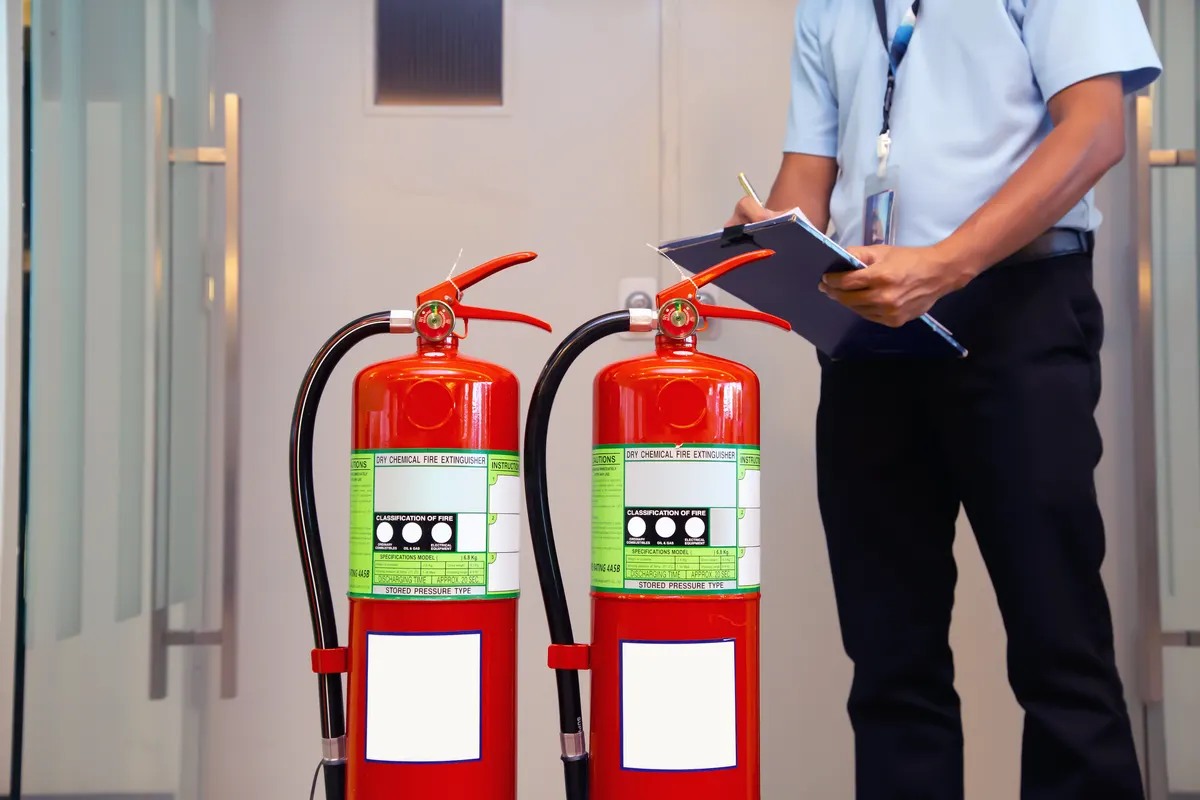
Fire extinguishers, escape route signage and alarm panels can be checked on the same patrols as general property protection. Defects are therefore noticed between the scheduled inspections and not only at them.
On every round the staff look at a few clearly defined points that you can use as a checklist yourself:
- Are escape doors free and can they be opened without a key?
- Are pallets, boxes or bicycles standing in corridors and stairwells?
- Are fire extinguishers in their place, clearly visible and not blocked?
- Do the emergency signs light up, and does the alarm panel show a fault?
Defects found are reported to building services the same day instead of only being noticed at the next official inspection date. The report then shows when something was noticed and when it was fixed, and this also helps you with your insurer and the authority.
Anyone who wants more than a smoke detector should therefore see the service as a fixed part of operations. The contacts at ESG can be reached around the clock, and our IHK-certified staff document their deployments in incident reports. Whether a fire watch is required in your case is decided by the responsible body, and this is not legal advice. We help with the implementation once the requirement is clear, and you can reach us through the fire protection service and the free, non-binding consultation.
Legal basis: Workplace Ordinance (ArbStättV), ASR A2.2 (measures against fire), assembly venue regulation, requirements of the building authority and the fire brigade